

Designing a Data Warehouse with erwin Data Modeler
Data. A small word to describe a concept which serves as the backbone of business around the world, not just those who trade in data, but also those who rely on quality data to drive decision-making and innovation. Of course, the next question then becomes one of storage, how do we store and effectively utilise something so important?
Much like physical inventory we need a way to efficiently collate data together in a system which allows us to efficiently run complex tasks, in this case queries made up of data from multiple sources centred around the desired subject. This is where the Data Warehouse comes in, providing a single source of truth stored in an optimised format to make our data useful.
We could spend many hours discussing benefits and methodology for our specific needs, but all this is ultimately futile unless we have an appropriate tool to implement our newfound ideas, which is where erwin comes in.
Erwin Data Modeler
A household name for many, erwin Data Modeler (erwin DM) provides the tools we need to build our new warehouse from the ground up. And as a warehouse grow and evolves, erwin DM can help us there as well, maintaining the warehouse for years to come.
Once our initial steps to define our needs and goals for the business users are completed, we can begin to build our logical model, capturing these needs within an easy-to-use visual format without tying ourselves to a set implementation.
Once ready though we can build our physical model directly from our logical with no additional work to repeat our previous steps. With support for a wide variety of target DBMS available from relation to NoSQL across on-prem and cloud platforms we can tailor our warehouse for our specific implementation from the get-go. And if plans change, we can always switch with minimal compromise. Amongst numerous tools erwin DM provides multiple features to aid our warehouse design:
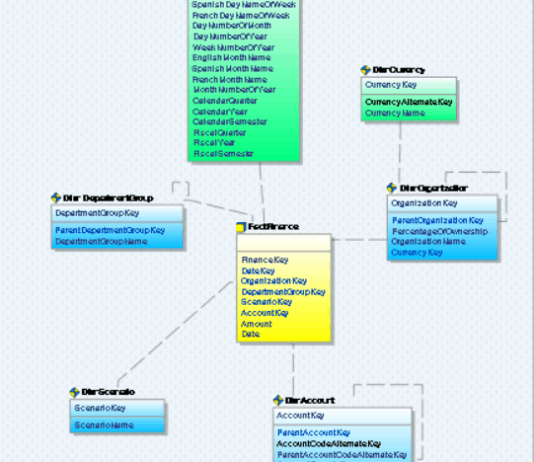
- Support for Star- Schema modelling, designate tables as facts, dimensions or slowly changing dimensions.
- Automatic diagram layouts take out diagrams beyond the standard ER layouts for better visualization for technical
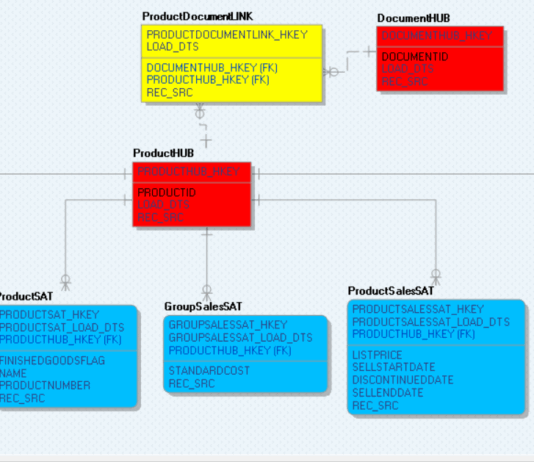
- Built in Data Vault components which can be assigned at the click of a button.
- Don’t worry, we can also customise and create new components for specialized environments.
- Compliance – Combining Name and Datatype standards we can ensure that the warehouse stays in keeping with established model practices,
- Verify models with custom Enterprise Compliance reports.
- Create new or integrate existing business glossaries with added PII classification.
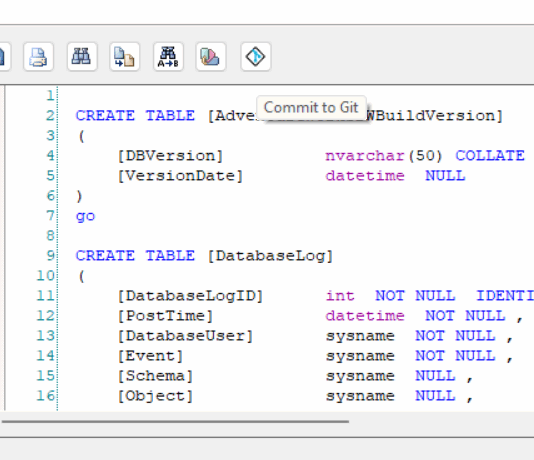
- Automate DDL generation and release with git integration for Azure DevOps and others.
Maintaining our Warehouse
Creating a warehouse is all well and good, but the data landscape is constantly changing to reflect new technologies and methodologies, and our warehouse needs to evolve accordingly to match the business requirements. erwin DM is a long-term investment, and can continue to aid over the life of our warehouse:
- Centralized storage keeps models accessible even as teams evolve and grow
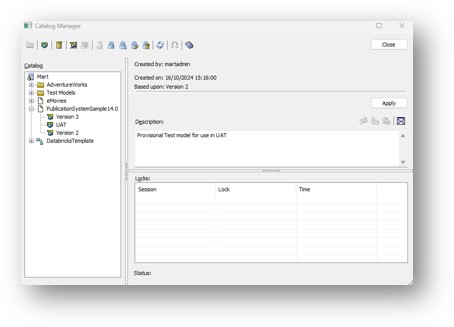
- Version control for iterative development, including named versions for milestones.
- Log model update history for who made each change, a data warehouse is a high value asset after all.
- Compare between both models and the warehouse: Prevent discrepancies forming between the documentation and the warehouse.
- Integrate with erwin Data Intelligence: Master metadata to create value across the entire enterprise showing where data has come from and how it’s used.
For a business to excel the need to understand their data cannot be understated. A well-designed Data Warehouses provide the means to collate, store and analyse the data, and erwin DM provides the tools to create it.
Try erwin DM today—on your data
Start your free trial, and if you’d like, our team can review your initial warehouse model needs.